skip to Main Content

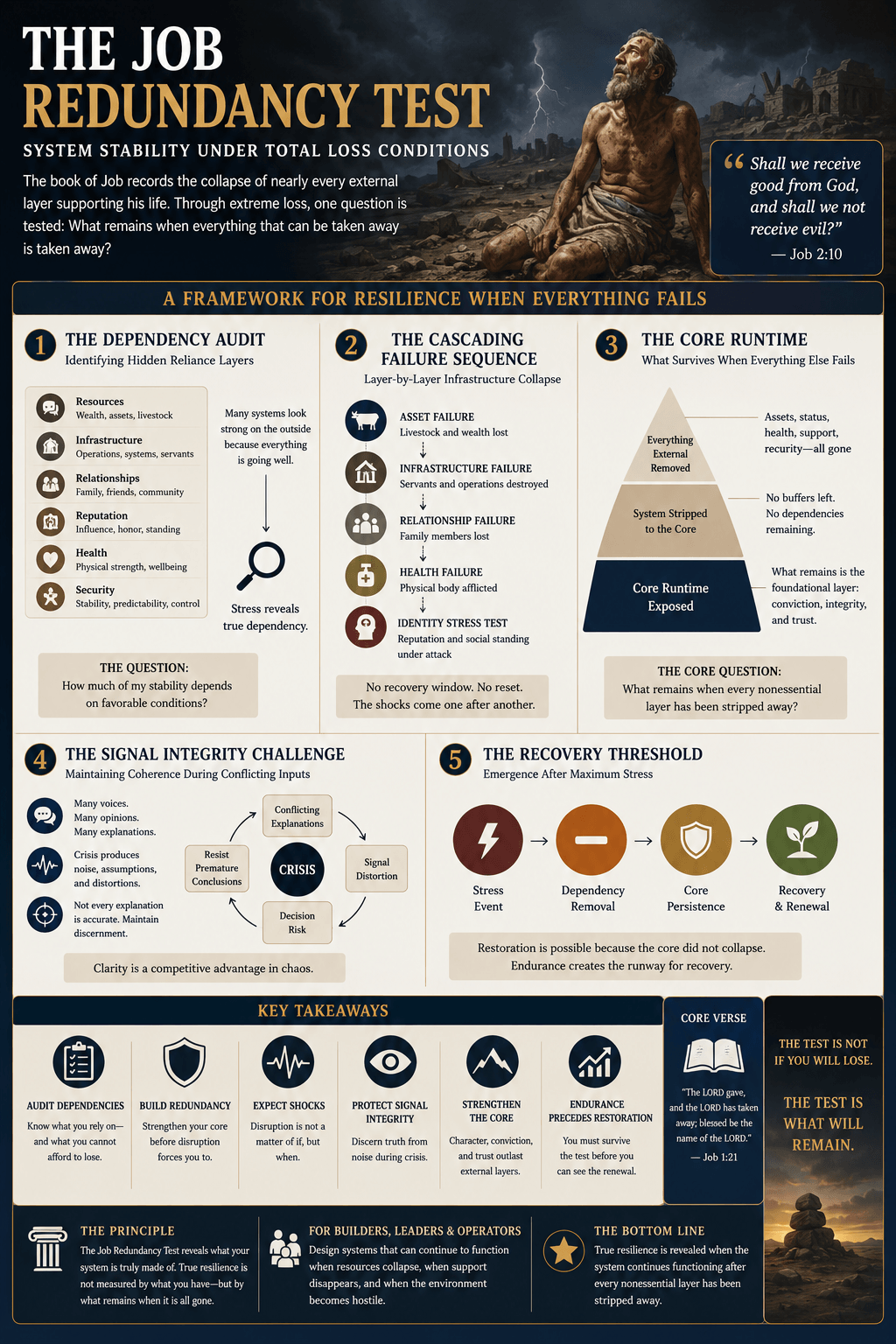
THE JOB REDUNDANCY TEST

The Job Redundancy Test reinterprets the Book of Job through the lens of systems resilience, dependency analysis, and continuity under extreme stress. By examining cascading failures, hidden reliance layers, signal integrity, and recovery after loss, this framework explores what remains when every nonessential layer has been stripped away.
Read More

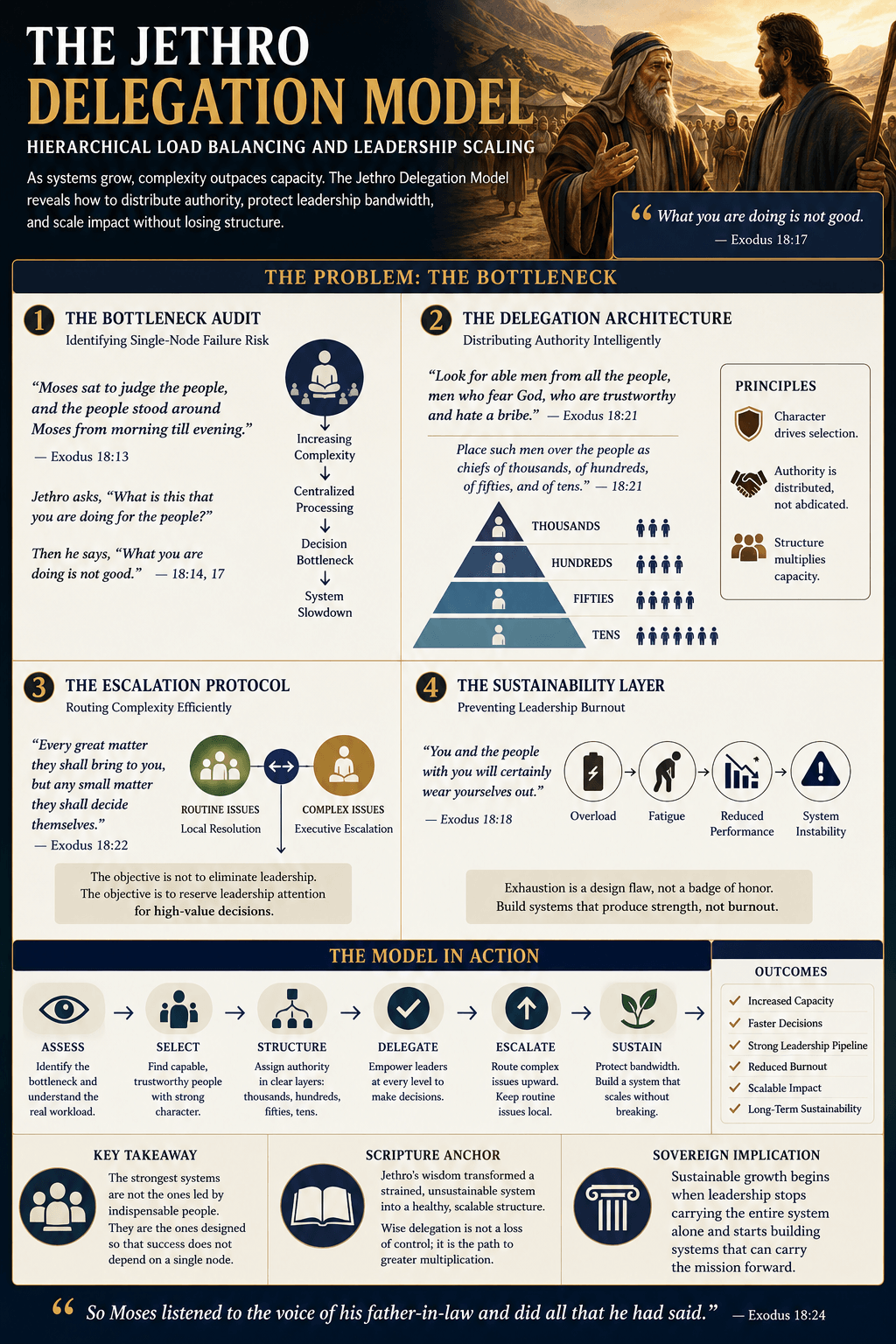
Hierarchical Load Balancing and Leadership Scaling

What happens when a leader becomes the bottleneck? The Jethro Delegation Model examines how Jethro's advice to Moses created a scalable leadership architecture built on delegation, structured authority, and sustainable decision-making—principles that remain essential for growing organizations today.
Read More

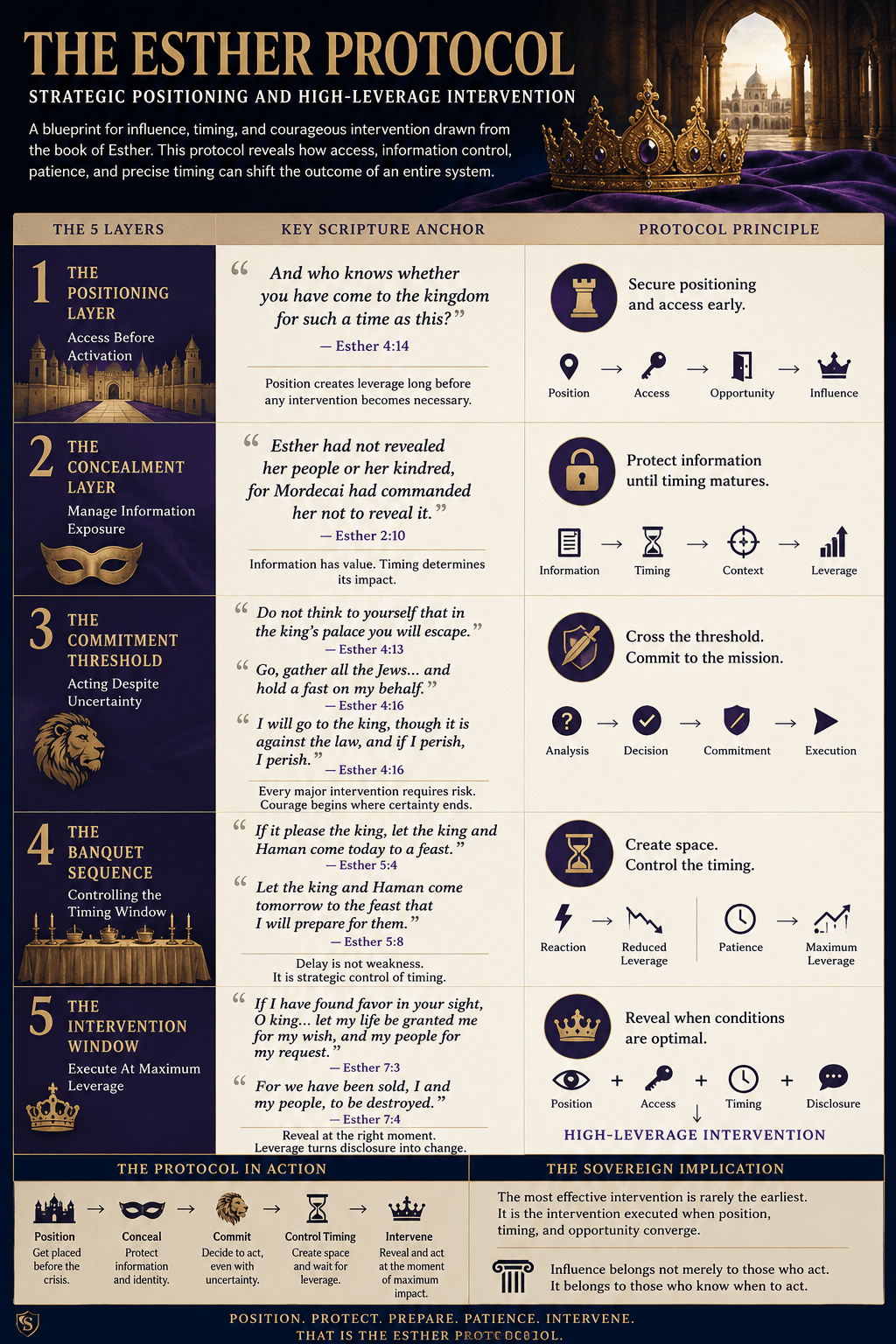
Strategic Positioning and High-Leverage Intervention

A genocidal decree had already entered the administrative machinery of the Persian Empire, and the outcome appeared inevitable. The Esther Protocol explores how positioning, patience, controlled disclosure, and courageous execution enabled a single intervention to alter the trajectory of an entire system.
Read More

Navigating Legacy System Obsolescence

The Davidic Exploit reinterprets the relationship between David and Saul as a framework for navigating institutional decline and legacy system obsolescence. By examining David's restraint, parallel infrastructure building, and long-term strategic patience, this doctrine explores how emerging systems can survive hostile incumbents without inheriting their instability or corruption.
Read More

Decentralized Peer-to-Peer Agentic Networks

After believing he was the last uncompromised node remaining, Elijah discovers a hidden network of 7,000 independent allies operating beyond the visible surface layer. The Elijah Sub-Routine explores how decentralized ecosystems survive through distributed resilience, autonomous action, and invisible continuity.
Read More

Asymmetric Resource Leverage and Hyper-Vetted Node Scaling

The Gideon Vector reinterprets Judges 7 through the lens of systems architecture, organizational design, and asymmetric strategy. By examining Gideon's reduction from 32,000 personnel to 300 highly vetted operators, this framework explores how disciplined awareness, psychological stability, and synchronized execution enable small, aligned networks to outperform larger systems burdened by complexity, fragmentation, and operational drag.
Read More

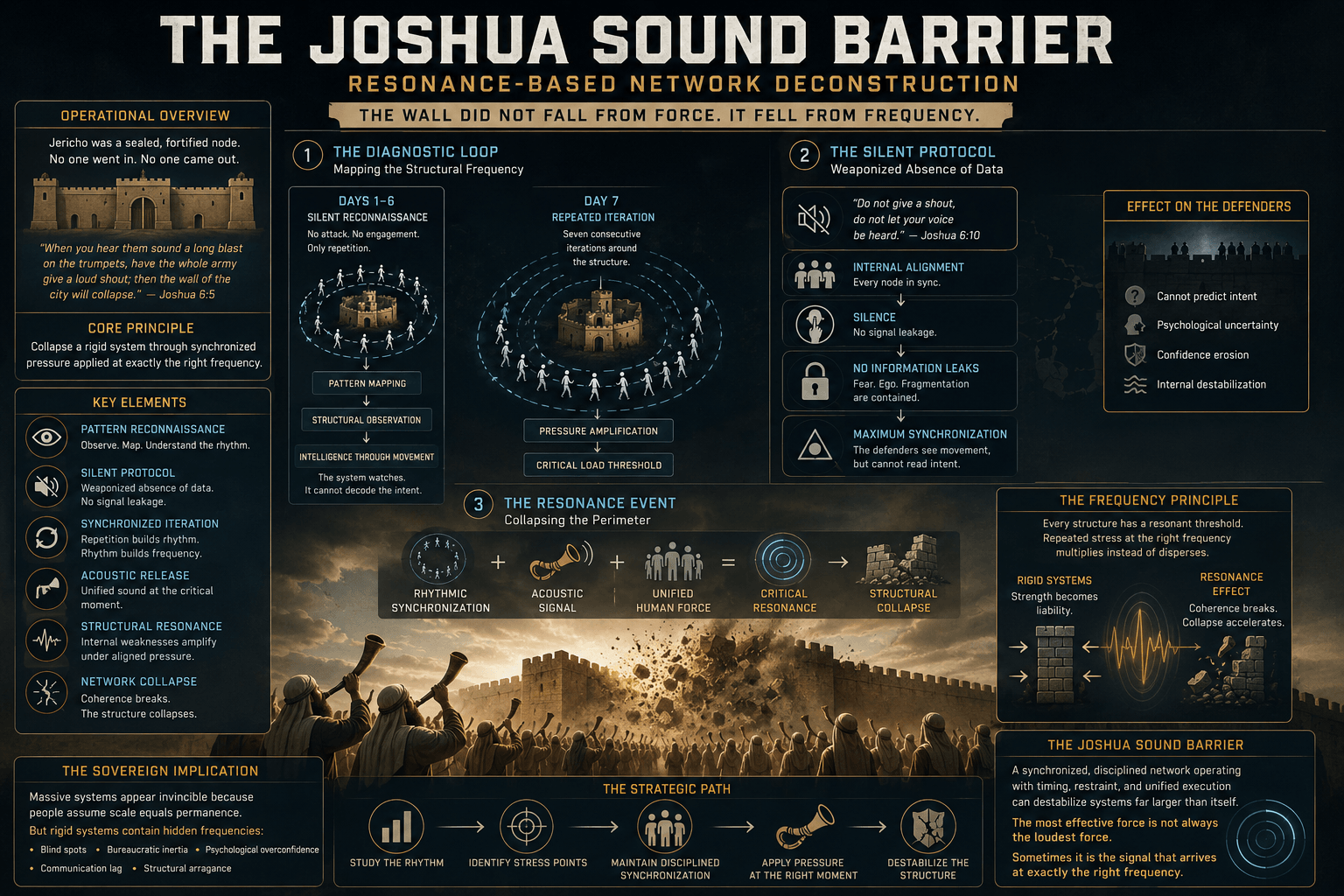
Resonance-Based Network Deconstruction

The Joshua Sound Barrier reinterprets the fall of Jericho through the lens of systems architecture and resonance theory. Rather than a story of brute force, it presents a framework for understanding how disciplined synchronization, strategic silence, and precisely timed execution can destabilize rigid structures from within by exploiting their hidden frequencies and structural weaknesses.
Read More

Architecting the Out-of-Network Asset

The Melchizedek Protocol reexamines the biblical figure Melchizedek through the lens of systems architecture, sovereignty, and decentralized authority. By framing Melchizedek as the original Out-of-Network Asset, this analysis explores how independent systems can operate beyond traditional structures of control while maintaining resilience, legitimacy, and long-term continuity.
Read More
Back To Top